Most homeowners think of spring as planting season. It makes intuitive sense — the weather warms, plants start blooming, and the impulse to add something to the yard is at its highest. What the nursery industry and experienced landscapers know, and most homeowners don’t, is that fall is actually the superior planting season for trees and shrubs in the Atlanta area — and that the plants installed in September and October have a meaningful head start over those planted the following April.
At Woodburn Landscapes, serving Sandy Springs, Brookhaven, Buckhead, Dunwoody, Chamblee, Smyrna, and Vinings, founder Max Woodburn’s team installs trees, privacy plantings, and landscape shrubs year-round — but fall is when they most often recommend that clients act on planting plans they’ve been considering. Here’s the science behind why.
The Root Development Argument
When a tree or shrub is planted, the above-ground portion of the plant immediately experiences stress from the change in environment — new light conditions, different soil, altered moisture patterns. The root system’s job in the weeks following planting is to establish new connections with the surrounding soil, extending into the native ground and building the absorption network that will support the plant going forward.
Root growth doesn’t require warm air temperatures — it requires warm soil. Georgia’s soil retains warmth well into fall, typically maintaining soil temperatures that support active root growth until late November or December. A tree planted in October has eight to ten weeks of root establishment happening in warm soil before true winter arrives. During those weeks, the plant isn’t expending energy producing and supporting new leaves — all of that energy goes directly into root development.
A tree planted in April has the opposite challenge: it’s establishing roots simultaneously with leafing out, flowering, and managing the rapidly increasing heat load of a Georgia summer. The same tree gets a significantly easier start when planted in fall.
Reduced Transplant Stress
Transplant stress — the shock that occurs when a plant is moved from nursery conditions to a new planting environment — is one of the primary causes of failure in newly installed landscape plants. The severity of transplant stress is directly related to the environmental demands placed on the plant immediately after installation.
Fall planting means lower air temperatures, lower light intensity, and typically more reliable rainfall than summer. The plant isn’t being asked to sustain high rates of transpiration through leaves while simultaneously establishing roots in unfamiliar soil. The reduced physiological demand of fall conditions means more of the plant’s resources can go to root establishment — which is exactly where they need to go.
Spring-planted trees and shrubs go almost immediately into the most stressful season: Georgia summer. Even with adequate watering, the combination of heat, humidity, and the establishment period creates a genuinely difficult first season that fall-planted trees simply don’t experience.
Privacy Tree Installation — Why Timing Matters
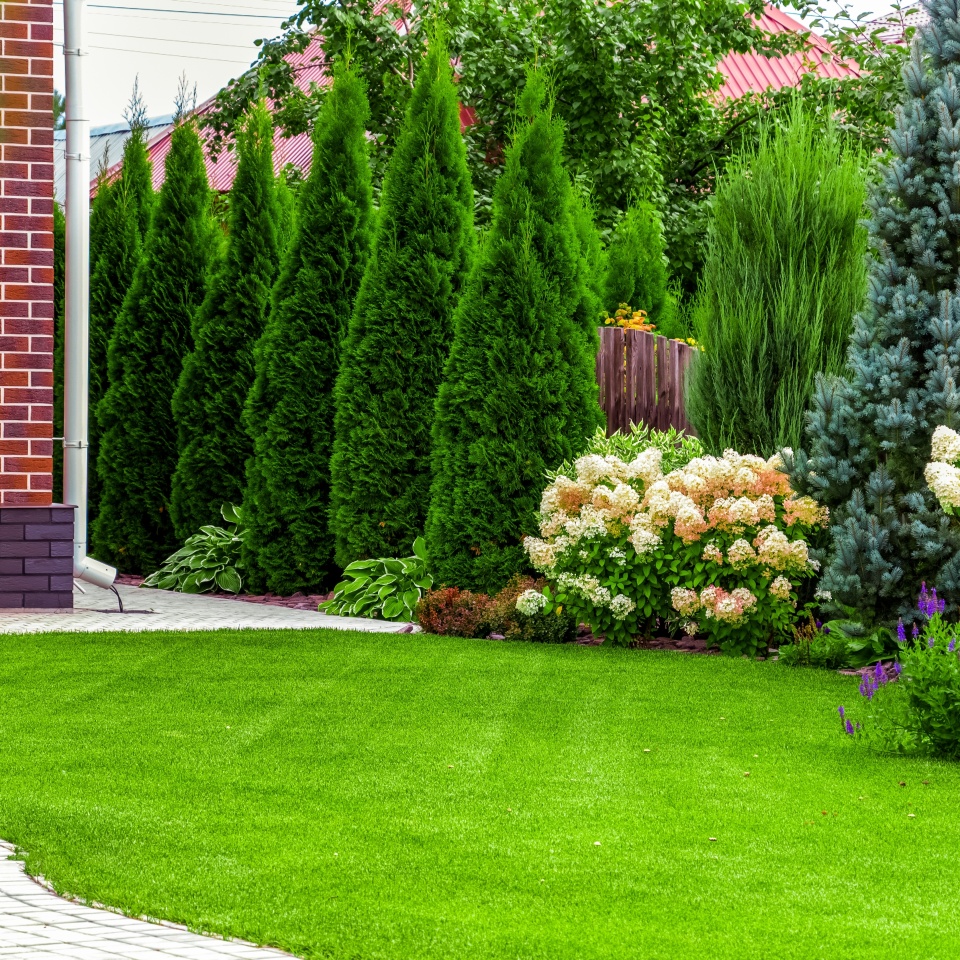
Privacy tree plantings are one of Woodburn Landscapes’ most requested services throughout the Atlanta area — and fall is the ideal window for this specific application. Green Giant arborvitae, Leyland cypress, wax myrtle, and the other privacy tree varieties most commonly planted in North Georgia all establish root systems more efficiently in fall soil conditions.
For homeowners who want meaningful privacy screening by next summer — for the pool season, the outdoor entertaining season, the months when the yard is most actively used — the trees planted this fall will be noticeably more established and further along in their screening than the same trees planted in spring would be. Eight to ten months of establishment (fall + winter root growth + spring growth flush + summer growth) versus four to five months (spring planting + summer growth) is a real difference in how quickly the privacy benefit materializes.
Woodburn Landscapes assesses the specific sight lines, fence lines, and property boundaries of each installation to recommend the right species, spacing, and staggering to produce effective screening for each property’s specific conditions — not a generic recommendation that applies regardless of the situation.
What Else Fall Planting Covers
Beyond privacy trees, fall is the right window for a broader range of landscape planting:
- Foundation shrubs: The plantings that define the interface between the home and the lawn are highly visible and highly consequential for curb appeal. Fall establishment gives these shrubs a strong root system before spring’s visual demands arrive.
- Flowering shrubs and perennials: Many flowering plants — including azaleas, hydrangeas, and camellias — are available at excellent sizes in fall and establish well through winter. First-year flowering performance the following spring is typically better from fall-planted specimens than from spring-planted ones.
- Shade trees: Investment-grade shade trees — oaks, maples, redbuds — benefit enormously from fall planting. The long establishment window of fall through spring gives the root system time to anchor before the tree has to sustain a full canopy through Georgia summer.
- Ornamental grasses: These are best divided and replanted in fall, establishing over winter and putting on vigorous new growth in spring.
What the Consultation at Woodburn Landscapes Involves
The planting consultation begins with the property — walking the yard, identifying the sight lines that need addressing, the sun exposure across different areas, the existing soil and drainage conditions, and the aesthetic goals the homeowner has in mind. From this assessment, Max Woodburn’s team provides specific species recommendations, placement plans, and realistic expectations for how the planting will develop over the first year and beyond.
The best planting decisions are specific to the property, the Atlanta climate, and the homeowner’s goals — which is exactly what the on-site consultation produces.
Contact Woodburn Landscapes for Your Fall Planting Plan
Woodburn Landscapes serves residential and commercial properties throughout Sandy Springs, Brookhaven, Buckhead, Dunwoody, Chamblee, Smyrna, Vinings, and the greater Atlanta area from their office at 2090 Dunwoody Club Drive, Suite 106-110, in Sandy Springs. Call (678) 551-0916 or visit woodburnlandscapes.com to request your free quote. The trees and shrubs planted this fall will be further along than you’d expect by the time spring arrives — and that head start makes all the difference.
Posted on behalf of
2090 Dunwoody Club Dr, STE 106-110
Atlanta, GA 30350
Phone: (678) 551-0916
Email: info@woodburnlandscapes.com
Hours
Monday - Friday
8:30am - 5:30pm