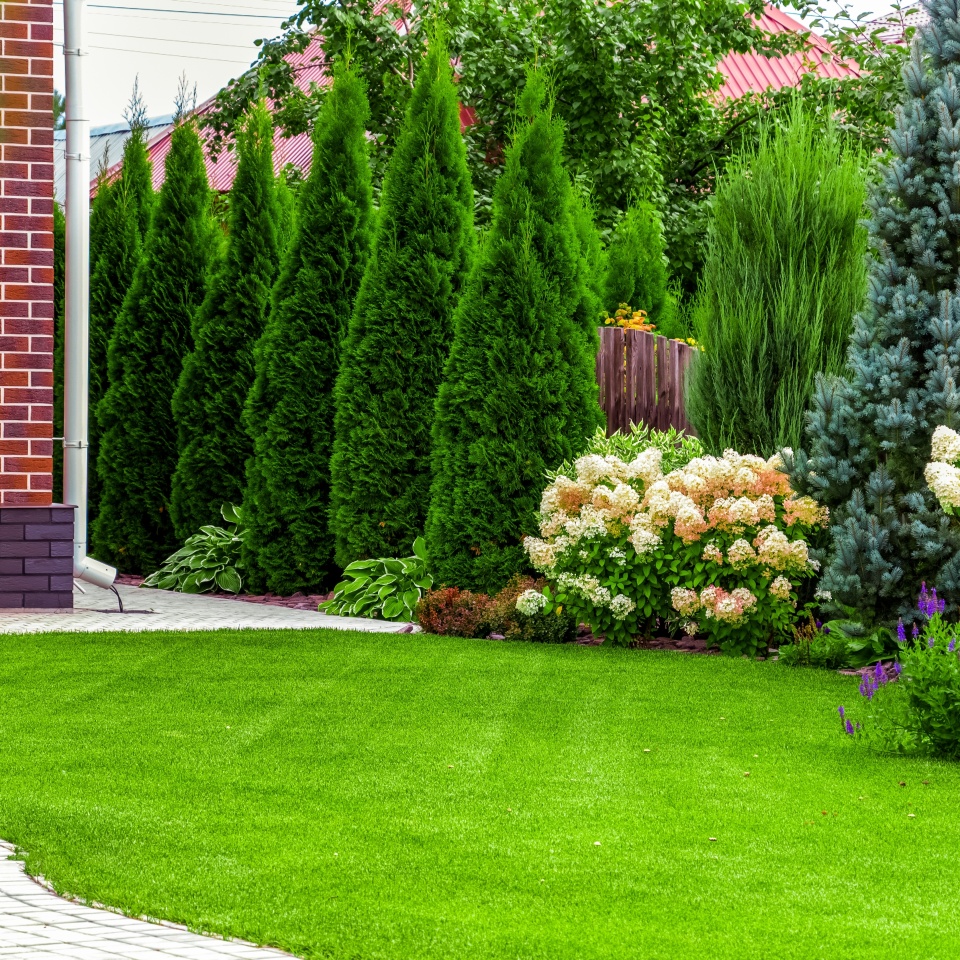
Every lawn care recommendation has a season it belongs to. Core aeration and overseeding with tall fescue belongs to September — specifically and urgently. Miss this window by six weeks and the opportunity is largely gone until the following year. This is the lawn care moment that matters most for Atlanta homeowners who want a thicker, greener, more resilient lawn next spring.
Woodburn Landscapes serves residential properties throughout Sandy Springs, Brookhaven, Buckhead, Dunwoody, Chamblee, Smyrna, and Vinings with year-round professional lawn and landscape care. Founder Max Woodburn is a Georgia native who has watched more Atlanta lawns than most — and fall aeration and overseeding is the service he consistently points to as the highest-impact thing a homeowner can do for a struggling or thinning fescue lawn.
Why Fescue and September Are Made for Each Other
Tall fescue — the cool-season turf species most appropriate for the Piedmont and North Georgia transition zone — grows most aggressively in the cool temperatures and adequate rainfall of fall. It struggles in summer heat, slows growth dramatically, and often shows visible thinning and stress by August.
September begins the recovery window. Soil temperatures in Atlanta are still warm enough for germination (above 50°F), but air temperatures have dropped out of the range that causes heat stress during germination. The two-month window of fall weather provides exactly the growing environment that newly seeded fescue establishes well in — developing root systems through October and November that will sustain the turf through winter and enable vigorous spring growth.
Waiting until October or November reduces germination rates, limits root establishment before winter dormancy, and produces weaker turf that is more vulnerable to disease and drought the following summer. The window is real.
What Core Aeration Does — and Why Compacted Soil Defeats Everything Else
North Atlanta’s clay-heavy soil compacts under foot traffic, equipment weight, and rainfall impact. Compacted soil prevents water, air, and nutrients from reaching grass roots — meaning fertilizer applications, irrigation, and overseeding all perform below their potential in compacted turf.
Core aeration removes small cylindrical plugs of soil from the lawn at regular spacing, creating channels that immediately improve water and air infiltration. These channels also provide the perfect seedbed for overseeded fescue — direct soil contact without competition from existing thatch or surface debris.
Aerating without overseeding wastes the seed access opportunity the aeration creates. Overseeding without aerating produces poor germination rates because seed sitting on compacted, thatchy turf surfaces doesn’t make adequate soil contact. The two services work synergistically — and performed together in September, they produce results that neither achieves independently.
What the Overseeding Process Involves
The Woodburn Landscapes fall aeration and overseeding process begins with the core aeration, followed by application of premium-grade tall fescue seed at the appropriate rate for either renovation of a significantly thinned lawn or overseeding to thicken an existing stand. Starter fertilizer applied at seeding time provides the phosphorus that stimulates root development in new seedlings.
The seed selection matters. Premium tall fescue varieties that perform well in the Atlanta climate — drought-tolerant, shade-adapted, fine-textured varieties that maintain better summer performance than older commodity seed mixes — produce noticeably better results than standard contractor-grade seed.
Post-seeding irrigation is the critical variable in the homeowner’s control: newly seeded fescue requires consistent moisture during germination (approximately the first 14 to 21 days) — light, frequent irrigation that keeps the seed zone moist without oversaturation or erosion. This is the period during which the seed either germinates or fails, and consistent irrigation makes the difference.
Schedule Your Fall Aeration and Overseeding With Woodburn Landscapes
Contact Woodburn Landscapes at (678) 551-0916 or through woodburnlandscapes.com to schedule your fall aeration and overseeding. The window for meaningful results is September and early October — and in the greater Atlanta area, schedules fill quickly as that window opens. The lawn that’s addressed this fall arrives at spring in a fundamentally different condition than the one that isn’t.
How Much Seed — and Which Seed — Matters More Than Most Homeowners Know
The seeding rate for fescue renovation versus overseeding an existing stand differs substantially. A lawn being renovated from severe thinning or damage requires significantly higher seed rates to achieve adequate plant density. An established lawn being overseeded to maintain thickness requires lower rates applied at more even distribution.
The variety of fescue selected affects summer performance, shade tolerance, and fineness of texture in ways that become apparent over the following growing season. Coarser, older fescue varieties tolerate heat less well than improved turf-type tall fescue varieties developed specifically for transition zone lawns. The seed investment that goes into aeration and overseeding is too significant to compromise with commodity-grade seed that underperforms in Atlanta’s climate.
Woodburn Landscapes uses premium seed mixes selected specifically for North Georgia’s Piedmont climate conditions — drought-tolerant, shade-adapted varieties that maintain better summer performance than standard contractor mixes. For properties with significant mature tree canopy, shade-adapted fescue blends are selected that maintain adequate density in reduced light rather than thinning through successive summers.
The complete aeration and overseeding service — aeration, premium seed application, starter fertilizer, and irrigation guidance — produces a result that builds measurably over subsequent years as the fescue thickens and root systems deepen. Fall 2026 is the window that determines what your lawn looks like in spring 2027.
For North Atlanta homeowners who have been managing their own lawn care and finding that fall overseeding produces inconsistent results year over year, the professional aeration and overseeding service that Woodburn Landscapes provides — with premium seed, proper seeding rates, and the post-seeding irrigation guidance that determines germination success — produces noticeably different outcomes. The lawn that was seeded professionally in September looks different by April than the one that wasn’t. Contact Woodburn Landscapes at (678) 551-0916 or woodburnlandscapes.com to schedule before the window closes.
Max Woodburn’s deep familiarity with Atlanta’s specific soil conditions, turf varieties, and microclimate variations across North Atlanta neighborhoods means the aeration and overseeding recommendations he makes are calibrated to each property’s specific situation — not a formula applied uniformly. Sandy Springs, Brookhaven, Buckhead, Dunwoody, Chamblee, Smyrna, and Vinings homeowners have access to that local expertise without leaving their market. This fall, that expertise is available in the window when it matters most.
Posted on behalf of
2090 Dunwoody Club Dr, STE 106-110
Atlanta, GA 30350
Phone: (678) 551-0916
Email: info@woodburnlandscapes.com